

If you are comparing multi asset trading platforms, the real question is not which platform lists the most instruments. It is which one fits the way you trade, the markets you can legally access, and the tools you actually need when risk is live.
A platform can offer stocks, forex, futures, options, CFDs, bonds, and crypto, then still fall short on execution quality, order controls, automation, reporting, or jurisdiction fit. That is why serious platform selection starts with workflow. How orders are routed. Whether risk is visible in real time. What API or FIX connectivity is available. Which account types and regions are supported. And how total trading costs behave once spreads, market data, financing, and permissions are included.
That matters even more as the category expands. One market estimate valued the global multi-asset trading platform market at $12.3 billion in 2025, with a projected rise to $22.8 billion by 2034 at a 7.8% CAGR MarketIntelo. Market sizing sources vary, but the broader direction is consistent. Multi-asset access is becoming more common, while platform differentiation is shifting toward execution, connectivity, and operational fit.
This guide compares 10 widely used multi asset trading platforms in a practical way. It is designed for readers who are trying to narrow the field, not just browse product pages. You will learn which platform types suit different trading styles, where each one is strongest, how supported assets and automation differ, what costs and restrictions can change the decision, and how to build a realistic shortlist without relying on marketing claims.
The limitation is the broker, not the software
What the cost conversation should include
Why it works for newer active traders
Why the platform appeals to technically minded traders
The boundary is regulatory, not just technical
Regional fit is part of the decision
The strongest argument for Saxo
What to watch before opening an account
Why systematic traders pay attention
Why it still matters in 2025 and beyond
Why it attracts retail investors
Best for traders who value learning and structure
Why active multi-asset traders keep it on the shortlist
The goal is not to name one universal winner. It is to help you identify which platform is best suited to your trading process, capital base, and region.
Table of Contents
- Best Multi-Asset Trading Platforms by Use Case
- How We Compared These Platforms
- 1. Interactive Brokers TWS and IBKR Platforms
- 2. Charles Schwab thinkorswim
- 3. TradeStation Desktop, Web, and Mobile
- 4. Saxo Bank SaxoTraderGO and SaxoTraderPRO
- 5. IG Trading Platform, DMA, and MT5
- 6. CMC Markets Next Generation and MT5
- 7. XTB xStation 5
- 8. Plus500 and Plus500US
- 9. eToro Multi-Asset Investing and Options
- 10. MetaTrader 5 as Broker-Connected Platform Software
- Top 10 Multi-Asset Trading Platforms Comparison
- How to Choose Your Trading Platform Shortlist
- FAQ
- What is a multi-asset trading platform?
- Which multi-asset trading platform is best for beginners?
- Which platform is best for automation and API trading?
- Are multi-asset trading platforms the same as CFD platforms?
- Can US traders use all of these platforms?
- What costs matter most when comparing trading platforms?
- Is MetaTrader 5 a broker?
- Conclusion
Best Multi-Asset Trading Platforms by Use Case
Readers searching for the best multi asset trading platforms often want a fast shortlist before reading full reviews. The picks below are not universal rankings. They are use-case recommendations based on workflow fit, platform depth, and regional relevance.
Best overall
Interactive Brokers
Best for traders and investors who want broad cross-asset access, institutional-style order controls, and strong automation options in one account.
Best for beginners
XTB xStation 5
Best for newer active traders who want a clean interface, useful built-in analytics, and less setup friction than heavier professional platforms.
Best for advanced traders
Charles Schwab thinkorswim
Best for active US retail traders who need strong options workflows, rich charting, and a mature desktop platform without moving into a full institutional environment.
Best for automation and API trading
Interactive Brokers and TradeStation
Interactive Brokers stands out for API and FIX connectivity, while TradeStation remains relevant for traders who want to move from strategy design to rule-based execution in one desktop ecosystem Interactive Brokers IBKR Campus TradeStation.
Best for international traders
Saxo Bank
Best for users outside the US who want wide market coverage, global venue access, and a more API-oriented platform approach.
Best for CFDs
IG and CMC Markets
Both are strong for active CFD traders in eligible jurisdictions. IG is especially balanced for research and platform maturity. CMC is especially strong on charting and risk controls.
Best for social trading
eToro
Best for retail investors who value idea discovery, social features, and an easier entry point more than deep professional execution tooling.
The sections below explain where each of these recommendations holds up, and where trade-offs become important.
How We Compared These Platforms
We compared these platforms using criteria that matter in real trading decisions, not just product counts on a landing page.
First, we looked at asset coverage. A true multi-asset setup should give users meaningful access to more than one market type, but breadth alone was not treated as enough.
Second, we looked at execution and order tools. That includes advanced order types, routing flexibility, DMA or FIX access where relevant, and the platform's ability to support active risk management.
Third, we reviewed usability and workflow design. Some platforms are optimized for fast retail decision-making. Others are better for desk-style scanning, complex options analysis, or semi-systematic trading.
Fourth, we assessed automation and connectivity. API support, FIX availability, algorithmic support, strategy testing, and broker integrations can be decisive for advanced users.
Fifth, we considered cost structure. Visible commissions are only part of the picture. Spreads, financing, data fees, exchange permissions, inactivity charges, and conversion costs can all change the economics.
Finally, we considered regulation and jurisdiction fit. Product availability, legal entities, and client protections differ sharply by region. A platform that looks ideal on paper may not be accessible, or may offer a different product mix, depending on where the account is opened.
This approach reflects the way professional trading desks evaluate platform infrastructure. Coalition Greenwich has argued that OMS and EMS systems became essential as execution, reporting, and regulatory requirements grew more complex under regimes such as MiFID II Coalition Greenwich.
1. Interactive Brokers TWS and IBKR Platforms
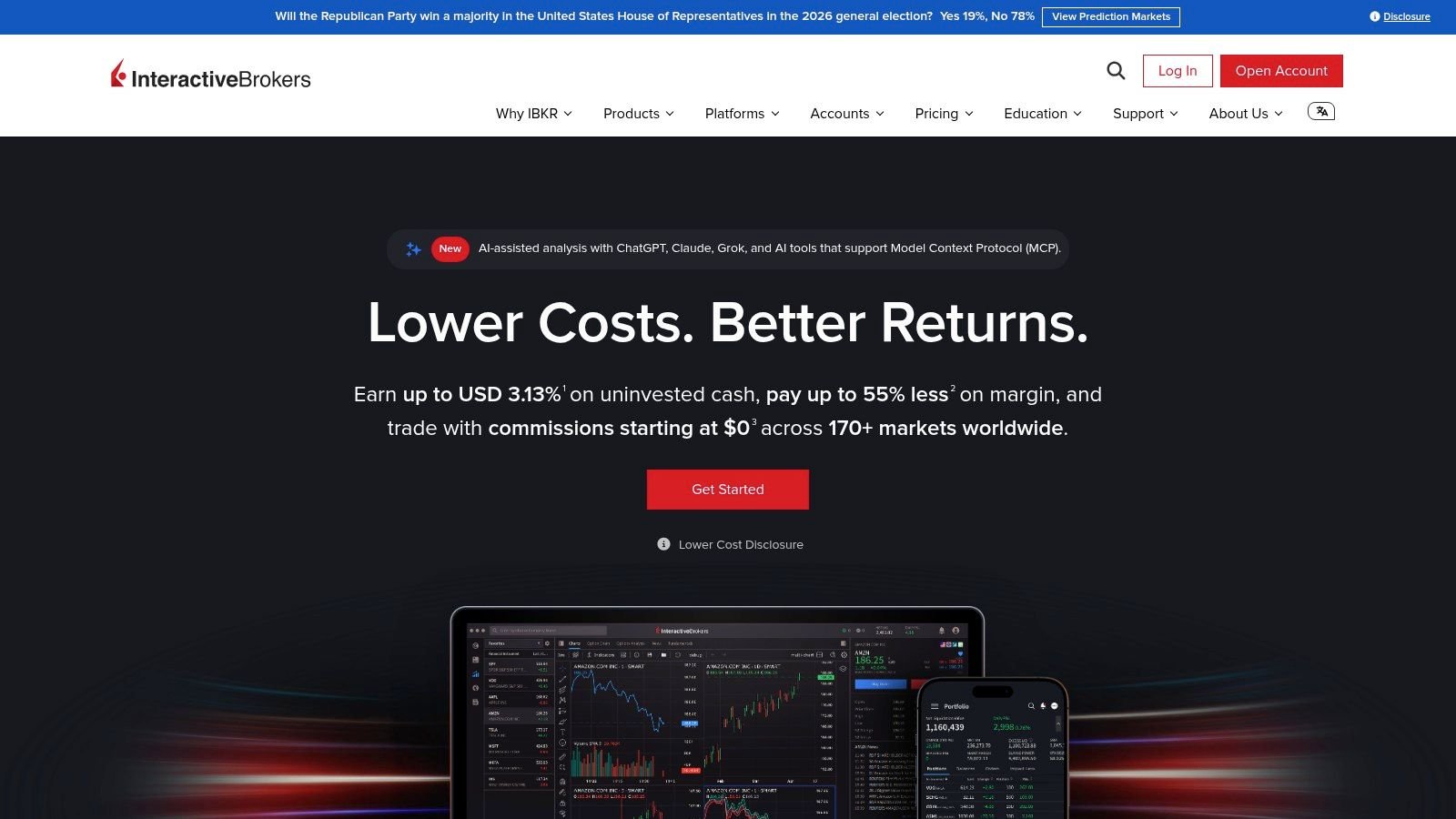
Interactive Brokers is often the benchmark when traders compare serious multi asset trading platforms. It is best suited to users who want broad market coverage, detailed order control, and automation potential without splitting activity across several brokers.
A major reason it stays on shortlists is that IBKR is built around capability, not hand-holding. Its platform family includes Trader Workstation, web and mobile interfaces, and multiple API pathways. The official IBKR developer stack includes TWS API, Client Portal Web API, and FIX API for eligible users Interactive Brokers IBKR Campus.
Best for
Active traders, RIAs, hedgers, global investors, and systematic users who need one account for multiple asset classes.
Supported assets
Stocks, ETFs, options, futures, spot forex, bonds, mutual funds, and selected crypto-related products, depending on region and entity.
Key features and trading tools
Trader Workstation remains the core experience for advanced users. It offers complex order types, portfolio analytics, options tools, scanners, basket trading, and risk monitoring through tools such as Risk Navigator.
The main benefit is not only access. It is the ability to work across asset classes from one operational environment. That matters if you hedge equity exposure with options, manage currency risk, or trade macro themes across several markets.
API, FIX, and automation capabilities
This is one of IBKR's clearest strengths. The platform supports direct API-based workflows and FIX for eligible users. That makes it more suitable than many retail-first alternatives for traders building internal tools, running automation, or integrating execution into research pipelines.
Fees and costs
IBKR is widely seen as cost-competitive, but the pricing discussion should not stop at headline commissions. Market data subscriptions, exchange fees, permissions, margin financing, and routing choices all affect the real cost of using the platform.
Major advantages
The platform combines broad coverage, high control, and strong connectivity better than most broker-led alternatives. For experienced users, that can reduce operational fragmentation.
Limitations
The learning curve is real. Setup friction, market data configuration, and interface density can frustrate newer traders. It is powerful, but not especially forgiving.
Regional and jurisdiction considerations
Availability is broad globally, but products and permissions still vary by country, entity, and account structure.
Interactive Brokers is not the easiest platform in this comparison. It is one of the most capable. For traders who already know what they need from a broker, that difference matters.
For a related look at the security side of financial infrastructure, see Vaira's View coverage of cybersecurity in banking.
2. Charles Schwab thinkorswim
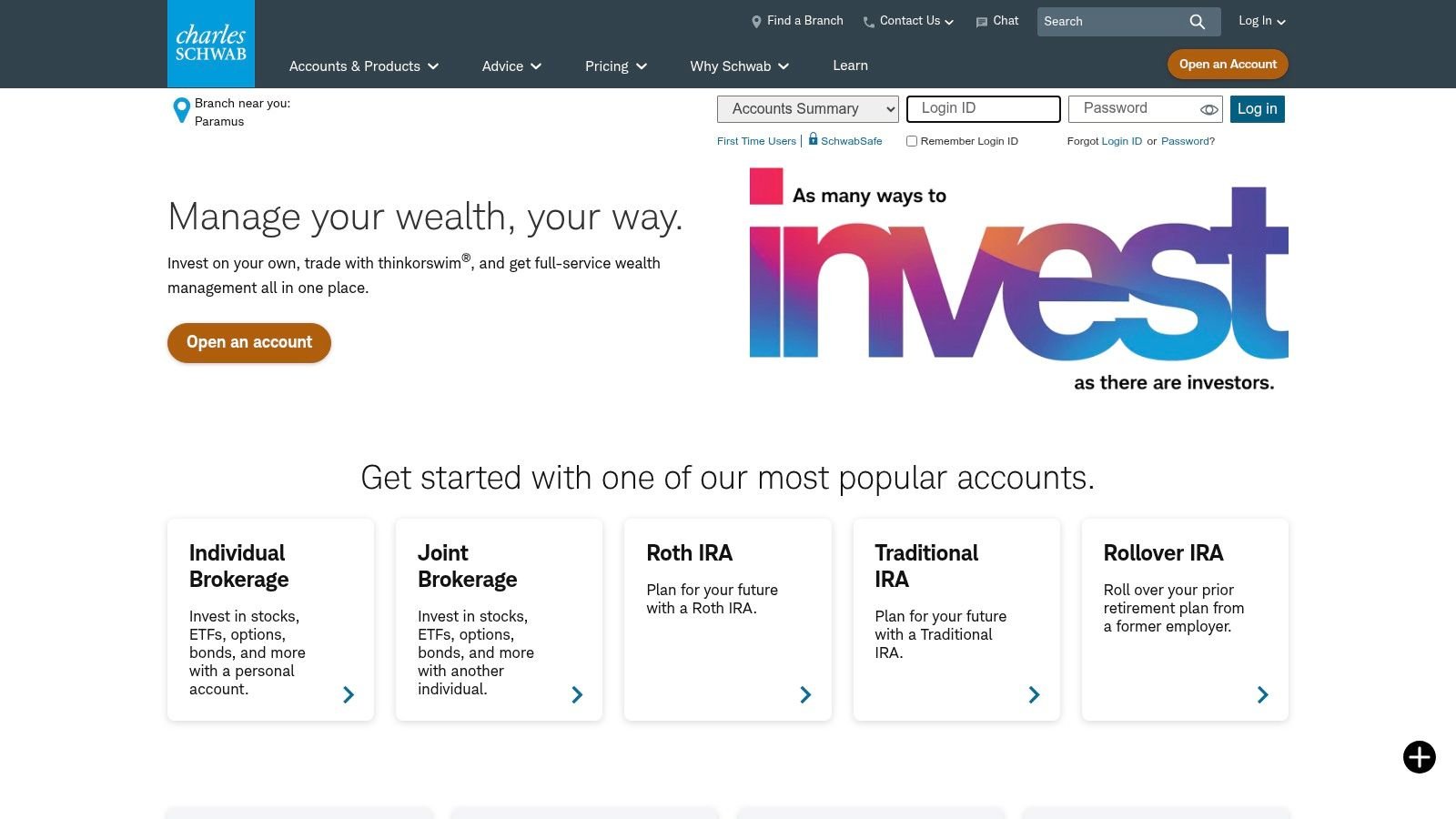
Charles Schwab thinkorswim is one of the strongest choices for US-based active retail traders who want multi-asset functionality in a more guided environment. It does not try to be an institutional OMS or EMS. Instead, it gives active individuals a mature desktop platform, strong charting, and one of the most established options workflows in retail trading.
Schwab states that thinkorswim supports options, futures, and forex through the thinkorswim platform family, and its paperMoney simulated trading environment remains available to clients Schwab.
Best for
US retail traders who prioritize options analysis, charting, simulated trading, and integrated broker support.
Supported assets
US equities, ETFs, options, futures, and forex.
Key features and trading tools
thinkorswim's core strengths are deep charting, options analytics, strategy visualization, watchlists, alerts, and paperMoney. It remains one of the more complete learning-to-execution environments in the market.
That matters because many traders do not need institutional connectivity. They need a platform that helps them test ideas, understand derivatives, and execute within a familiar retail account structure.
API, FIX, and automation capabilities
This is not the strongest platform here for broker-agnostic automation. While Schwab has developer access in its broader ecosystem, thinkorswim is better understood as a feature-rich retail platform than an open execution framework for advanced quant workflows.
Fees and costs
US stock and ETF trading is generally commission-free online, while options and futures involve contract or exchange-related fees. Traders should verify the current schedule directly with Schwab because product-specific charges can change.
Major advantages
The biggest advantage is balance. thinkorswim gives active retail users substantial depth without forcing them into the kind of operational complexity found on heavier professional platforms.
Limitations
Its regional relevance is limited, and it is less attractive for users who need direct FIX workflows or broad non-US venue access.
Regional and jurisdiction considerations
thinkorswim is primarily relevant to US-based users or those eligible for Schwab account access under its onboarding rules.
If your trading process depends on education, simulation, and strong options tooling, thinkorswim deserves a place near the top of the shortlist.
3. TradeStation Desktop, Web, and Mobile
TradeStation remains a serious contender for traders who want to move from analysis to testing to execution inside one desktop-heavy workflow. It has long appealed to users who think in terms of systems, scans, and repeatable rules rather than simple app-based order entry.
Best for
Systematic traders, active futures users, and discretionary traders who want advanced desktop analytics and strategy design tools.
Supported assets
Equities, options, futures, and, depending on account arrangement and region, selected crypto access.
Key features and trading tools
TradeStation's edge comes from platform continuity. RadarScreen, advanced charting, matrix-style trading tools, backtesting, and options-focused tools support a workflow where research and execution happen in the same environment.
API, FIX, and automation capabilities
Automation is central to TradeStation's identity. EasyLanguage remains one of its best-known tools for strategy development and rule-based trading TradeStation. For many traders, that matters more than having the broadest possible API stack.
Fees and costs
TradeStation's cost structure can be competitive for active users, but it depends on product type, account plan, and volume. Its futures commissions and exchange-related charges should be checked directly on the current pricing page because published tiers can change TradeStation Pricing.
Major advantages
The major advantage is platform depth for users who want to test and execute repeatable ideas rather than rely on a simpler retail interface.
Limitations
The desktop software can feel heavy, and newer users may find it less intuitive than modern web-first competitors.
Regional and jurisdiction considerations
Availability and product mix depend on entity and account eligibility.
TradeStation is not designed to be the easiest platform on this list. It is designed to be useful for traders whose edge depends on process discipline.
For a related perspective on digital access and financial infrastructure, see Vaira's View on internet and mobile banking.
4. Saxo Bank SaxoTraderGO and SaxoTraderPRO
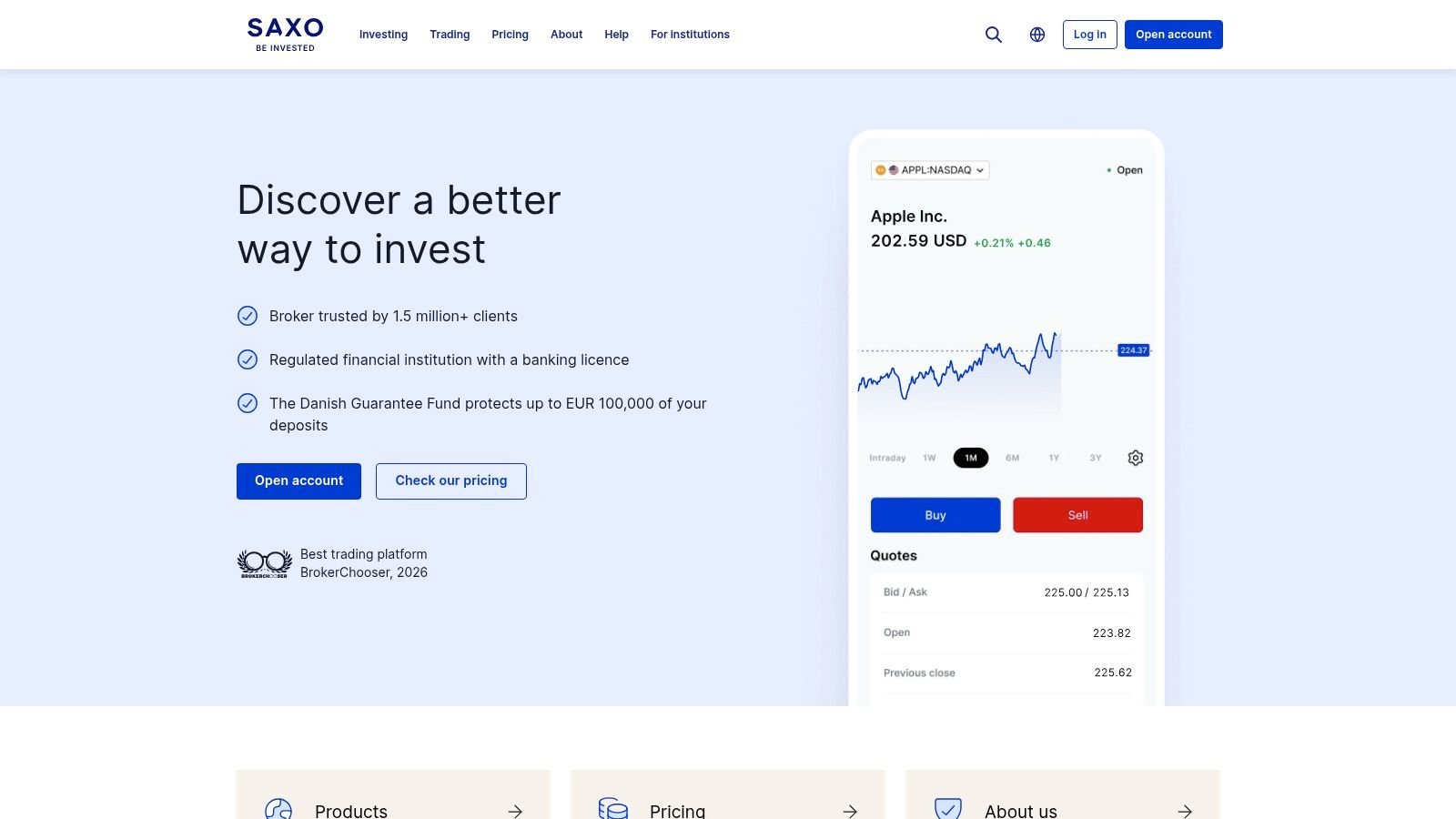
Saxo occupies a distinct place among multi asset trading platforms because it combines wide international market access with a more polished front end than many professional-style broker platforms. It is especially relevant for affluent retail users, professionals, and fintech teams outside the US.
Best for
International traders and developers who want broad global coverage with a more modern user experience.
Supported assets
Depending on region and account, Saxo supports equities, ETFs, options, futures, forex, bonds, and other listed or OTC products.
Key features and trading tools
SaxoTraderGO and SaxoTraderPRO are built around cross-asset access, charting, portfolio views, and institutional-style product breadth. The platform often appeals to users who want one provider for many global venues.
API, FIX, and automation capabilities
Saxo is notable for its OpenAPI approach, which gives it added relevance for fintech integrations and custom trading workflows.
Fees and costs
This is not always a simple low-cost story. Pricing can vary meaningfully by market, account tier, data requirements, custody rules, and venue. Users should review the exact legal entity and pricing schedule they would use.
Major advantages
Its strongest argument is breadth plus international usability. Saxo often feels more globally oriented than many US-centric broker platforms.
Limitations
The pricing structure can be more complex than simpler retail alternatives, and onboarding relevance depends heavily on country eligibility.

Regional and jurisdiction considerations
Saxo is generally aimed at a non-US audience, and regional availability should be checked before making it part of a shortlist.
Saxo is best understood as a platform for users who want global reach and professional flexibility without stepping into a full bank-owned trading workstation environment.
5. IG Trading Platform, DMA, and MT5
IG is a strong option for traders who want a mature derivative-focused platform with broad CFD coverage, research, and more advanced access paths in some jurisdictions. It is not the right fit for everyone, especially if the goal is a purely exchange-traded US-style setup, but it remains highly relevant in international CFD trading.
Best for
Active traders outside the US who want a well-established CFD platform with strong integrated research.
Supported assets
CFDs across indices, forex, commodities, shares, and other products, with regional differences. Some entities also support additional dealing or platform pathways.
Key features and trading tools
IG's proprietary platform offers charting, news, watchlists, market commentary, and risk-management tools in a mature web and mobile environment. For many users, the benefit is balance. It is more developed than a basic retail CFD interface, but less operationally dense than a fully institutional stack.

API, FIX, and automation capabilities
IG can be relevant to users who need more than retail-only execution, especially where DMA, API, FIX, or MT5 access is supported by the relevant entity. These features should be checked directly in the user's jurisdiction before a decision is made.
Fees and costs
Costs vary by market and legal entity. Spread-based pricing, commissions on certain products, and financing costs can all affect the total picture.
Major advantages
The platform combines research depth, broad derivative coverage, and a relatively mature user experience.
Limitations
It is less suitable for users who specifically want a pure exchange-traded stock and futures workflow or who cannot access its derivative products in their jurisdiction.
Regional and jurisdiction considerations
CFDs and spread betting are not available to US retail clients. Product sets and platform features vary by country.
IG is most compelling when a trader wants a serious CFD environment and values platform maturity as much as market access.
6. CMC Markets Next Generation and MT5
CMC Markets stands out for traders who want a dense charting environment and close control over risk within a CFD-oriented platform. If your workflow is driven by technical analysis and fast visual decision-making, CMC is easier to justify than some broader but thinner alternatives.
Best for
Technical traders and active CFD users who value charting depth and structured risk controls.
Supported assets
CFDs across indices, forex, commodities, shares, treasuries, and crypto where permitted, plus stockbroking in some regions.
Key features and trading tools
The Next Generation platform is known for charting breadth, indicators, pattern recognition, workspace flexibility, and order controls such as guaranteed stop-loss orders where offered.
API, FIX, and automation capabilities
CMC is less defined by deep automation than platforms such as IBKR or TradeStation. Its appeal is more about discretionary execution in a strong analytical interface.
Fees and costs
Costs depend on product type, spreads, financing, and region-specific fee schedules. As with all CFD providers, overnight financing and product structure can matter more than the visible ticket price.
Major advantages
The strongest advantage is analytical density. CMC gives technically minded users a lot to work with without requiring external charting just to make trading decisions.
Limitations
It is not the ideal platform for users whose priority is open connectivity, broker-neutral automation, or broad US market access.
Regional and jurisdiction considerations
CMC's CFD products are not available to US retail users, and platform features vary by region.
In a shortlist of multi asset trading platforms, CMC deserves attention when chart-led decision-making is central to the strategy.
7. XTB xStation 5
XTB xStation 5 is a practical choice for traders who want a modern interface without giving up the feel of an active trading platform. It is especially useful for newer or intermediate users who want straightforward navigation, visible costs, and fast access to core market tools.
Best for
Beginners and developing active traders who want usability first, with enough analytical depth to stay engaged as they improve.
Supported assets
CFDs on forex, indices, commodities, shares, and ETFs, plus real stocks and ETFs in eligible jurisdictions.
Key features and trading tools
xStation 5 keeps sentiment tools, heatmaps, economic data, and platform statistics close to execution. That helps newer users move from scanning to trade placement without juggling several interfaces.
API, FIX, and automation capabilities
This is not the best platform in this comparison for advanced automation or FIX-style connectivity. Its strength is user experience, not infrastructure extensibility.
Fees and costs
XTB is generally transparent on pricing, but product mix, currency conversion, and region-specific exchange charges can still affect the total cost.
Major advantages
Its biggest advantage is accessibility without feeling simplistic. Traders who struggle with heavier platforms often find xStation 5 easier to adopt.
Limitations
Advanced quants, desk-style traders, and users who need deep integrations may outgrow it.
Regional and jurisdiction considerations
Availability of real shares, ETFs, and CFD products depends on the country and account entity.
XTB works best when fast learning and practical usability matter more than maximum customization.
Users who value speed of learning over depth of customization often end up happier with XTB than with a heavier platform that takes weeks to master.
8. Plus500 and Plus500US
Plus500 is useful in this comparison because it shows how much platform identity can change by region. Its international CFD offering is deliberately simple, while Plus500US is more relevant to futures traders who want access to exchange-traded products and selected third-party platforms.
Best for
Retail traders who want a straightforward interface, and US-based futures users who care more about access and simplicity than professional desk tooling.
Supported assets
Outside the US, Plus500 focuses on CFDs across forex, indices, commodities, shares, ETFs, options, and crypto where allowed. In the US, Plus500US centers on futures access.
Key features and trading tools
The international platform emphasizes ease of use, mobile accessibility, and lightweight features such as +Insights and demo trading. Plus500US is more notable for product access and third-party connectivity than for proprietary workstation depth.
API, FIX, and automation capabilities
Plus500 is not built around extensive pro-level automation. On the US side, support for third-party platforms can still make the setup more flexible than a basic futures app.
Fees and costs
Users should pay attention to non-trading fees, financing, and regional differences in product pricing. On simplified platforms, these less visible costs can matter more than expected.
Major advantages
The main advantage is straightforwardness. Plus500 lowers the barrier to entry for users who do not want a complicated platform from day one.
Limitations
It is not a substitute for a professional OMS or advanced multi-venue execution framework.
Regional and jurisdiction considerations
The CFD and US futures offerings are very different products under the same brand. Users should evaluate the correct regional entity, not the global brand generally.
9. eToro Multi-Asset Investing and Options
eToro belongs in this list because it treats idea discovery as part of the product. That makes it different from terminal-style platforms focused mainly on execution precision. For many retail investors, that difference is not superficial. It shapes whether the platform feels usable at all.
Best for
Beginner retail investors, social traders, and users who want multi-asset access with a lower research barrier.
Supported assets
Depending on region, eToro offers stocks, ETFs, options in the US, crypto in many US states, and CFDs outside the US.
Key features and trading tools
Its social feed, portfolio discovery tools, and copy-style features are the platform's defining characteristics. The user experience is intentionally easier than more technical desktop platforms.
API, FIX, and automation capabilities
This is not an automation-led platform. Traders seeking sophisticated API execution, FIX, or custom routing will usually need another setup.
Fees and costs
The headline appeal often includes commission-free stock and ETF access in eligible regions, but users still need to check spreads, conversion costs, withdrawal fees, and product-specific terms.
Major advantages
eToro lowers the friction of getting started and offers a more participatory experience than traditional broker platforms.
Limitations
Depth is the main compromise. Advanced options traders, systematic users, and execution-sensitive professionals will likely find it too light.
Regional and jurisdiction considerations
Product access and legal terms vary significantly by region and legal entity.
For the right user, eToro is not just a broker interface. It is a discovery layer attached to investing and trading.
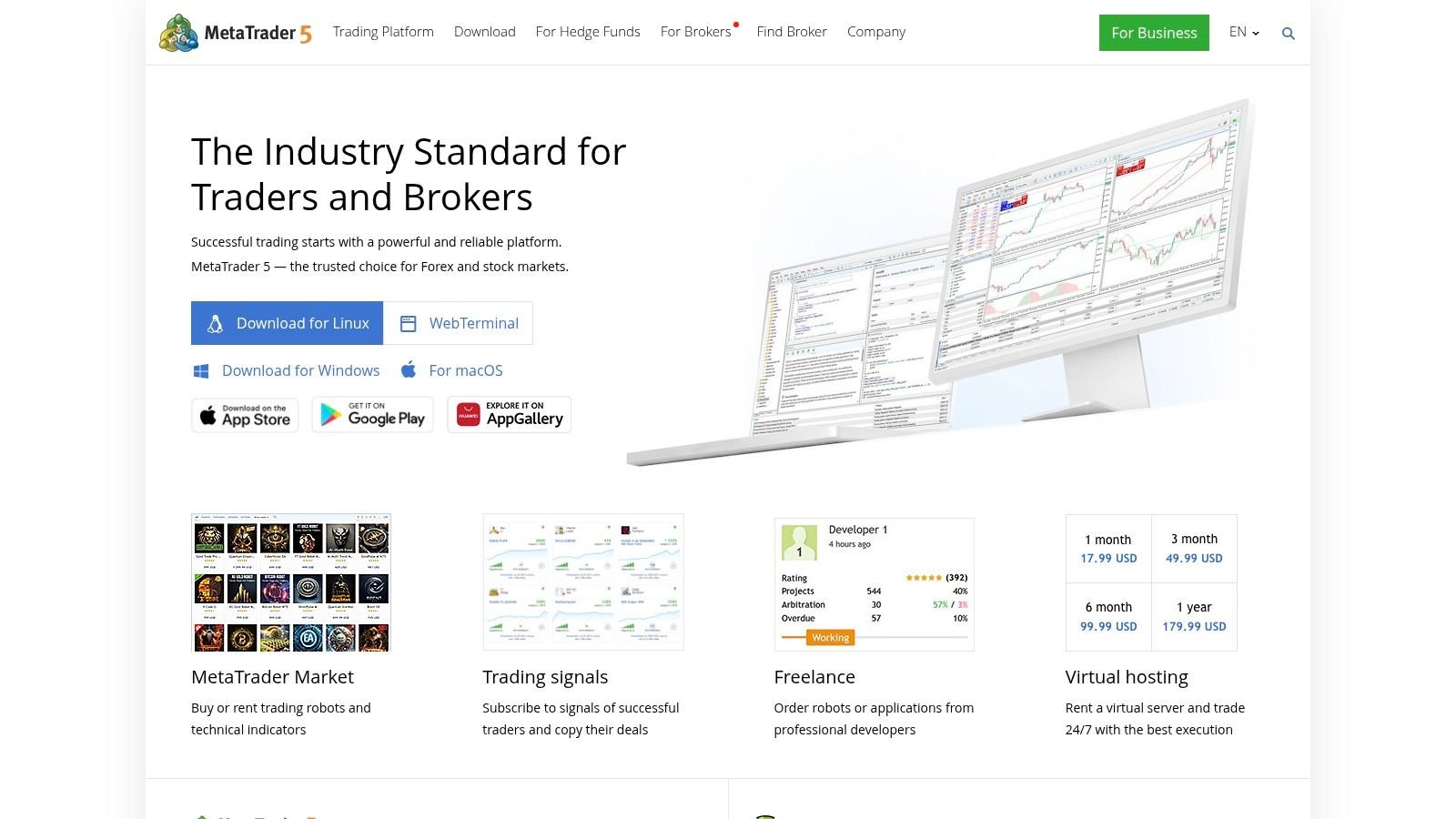
10. MetaTrader 5 as Broker-Connected Platform Software
MT5 is different from every other entry here because it is primarily platform software rather than a broker. That distinction matters when comparing multi asset trading platforms. The software may look familiar across brokers, but execution quality, market access, and pricing depend heavily on who provides the account.
Best for
Retail algorithmic traders, forex-focused users, and anyone who values a portable, broker-connected trading environment.
Supported assets
Broker-dependent. MT5 can support forex, CFDs, exchange-traded instruments, and futures where the connected broker enables them.
Key features and trading tools
MT5 remains popular because of built-in charting, market depth, time and sales, strategy testing, and the large ecosystem around indicators and automated trading tools.
API, FIX, and automation capabilities
This is one of the platform's biggest strengths. MQL5, Expert Advisors, and the broader marketplace make MT5 highly relevant to traders who want rule-based systems in a familiar environment.
Fees and costs
The software itself is often free to use, but real costs are broker-specific. Spreads, commissions, product access, slippage, and execution quality vary materially.
Major advantages
The strongest advantage is portability. Many traders can move between brokers without changing their core interface or code habits.
Limitations
The broker determines the outcome. Two MT5 accounts can feel completely different in practice.
Regional and jurisdiction considerations
Everything depends on the broker's licensing, product permissions, and regional offering.
MT5 is best understood as a common operating layer, not a guarantee of broad or high-quality market access.
For a broader perspective on how product layers interact with financial distribution, see Vaira's View on embedded finance.
MT5 is best viewed as a common language for broker connectivity, not a guarantee of institutional-grade execution.
Top 10 Multi-Asset Trading Platforms Comparison
The table below is intentionally concise. It is designed to help WordPress readers scan the key differences quickly before reading the detailed platform sections.
| Platform | Best For | Main Assets | Automation/API | Cost Profile | Key Limitation |
|---|---|---|---|---|---|
| Interactive Brokers | Advanced cross-asset trading | Stocks, ETFs, options, futures, FX, bonds, funds | Strong API and FIX support | Competitive commissions, plus market data and exchange fees | Steep learning curve |
| Charles Schwab thinkorswim | Active US retail traders | Stocks, ETFs, options, futures, forex | More limited than quant-focused brokers | Competitive retail pricing, derivatives fees apply | Mainly US-focused |
| TradeStation | Strategy testing and futures trading | Stocks, options, futures | Strong rule-based workflow and developer tools | Varies by plan, product, and activity level | Heavy desktop experience |
| Saxo Bank | International multi-market access | Stocks, ETFs, options, futures, FX, bonds | Strong API orientation | Can be complex by market and account tier | Limited relevance for US residents |
| IG | Mature CFD trading | CFDs on FX, indices, commodities, shares | Varies by region, API, DMA, and MT5 in some cases | Spread and financing costs matter | CFD access is jurisdiction-dependent |
| CMC Markets | Technical CFD trading | CFDs on FX, indices, commodities, shares, treasuries | Moderate, not automation-led | Depends on spreads, financing, and region | Less suitable for open connectivity needs |
| XTB xStation 5 | Beginners and ease of use | CFDs, plus real stocks and ETFs in some regions | Limited for advanced automation | Generally transparent, but region-specific extras can apply | Less depth for pro users |
| Plus500 / Plus500US | Simple CFD or retail futures access | CFDs internationally, futures in the US | Limited, with some third-party flexibility in US futures | Watch non-trading and financing costs | Not built for advanced workflow engineering |
| eToro | Social and discovery-led investing | Stocks, ETFs, options, crypto, CFDs by region | Minimal for advanced automation | Accessible pricing, but product fees vary | Lacks pro-grade execution depth |
| MetaTrader 5 | Broker-connected algo trading | Broker-dependent, often FX and CFDs | Strong via MQL5 and Expert Advisors | Broker-specific | Software quality does not guarantee broker quality |
How to Choose Your Trading Platform Shortlist
The best shortlist begins with jurisdiction.
Before comparing charting or fees, confirm what you can legally trade, which products are available in your country, and which legal entity would hold your account. A platform that is ideal for a UK CFD trader may be irrelevant for a US futures trader.
Next, define the instrument structure you actually want.
Do you need exchange-traded stocks and options, or are CFDs acceptable? Do you need futures margining, direct market access, or only broad directional exposure? Product labels can look similar across platforms, but the risk, pricing, and settlement rules behind them are very different.
Then map the platform to your actual workflow.
If you are discretionary, focus on charting, order entry speed, alerts, workspace design, and market context. If you are systematic, prioritize APIs, FIX, backtesting, automation stability, and data export. If you are managing larger capital or client exposure, risk reporting, audit trails, and account segmentation move higher on the list.
After that, calculate total cost, not headline cost.
That means commissions, spreads, market data, exchange fees, financing, conversion, inactivity charges, and withdrawal or transfer costs where relevant. On CFD-led platforms, financing and spread behavior can matter more than the visible entry fee. On broker-heavy platforms, data entitlements can materially change all-in cost.
The next filter is operational usability.
A technically powerful platform is not useful if it slows you down under pressure. Test how quickly you can place, amend, and review orders. Check whether position risk is visible enough. Confirm whether mobile, web, desktop, API, or FIX channels work the way your process requires.
It also helps to think about future complexity.
A beginner can reasonably choose a simpler platform if it matches current needs. But if you expect to add options, automation, or international products later, switching platforms can create unnecessary friction. In some cases, it is worth accepting a little more complexity now to avoid rebuilding your process later.
Finally, consider support, custody, and trust.
Read the platform's product disclosures. Review regulation, client asset treatment, support responsiveness, and onboarding requirements. A polished interface does not solve weak support or poor operational clarity.
The practical rule is simple. Choose the platform that executes your workflow well, in your region, at a cost structure you actually understand.
Industry evidence supports that logic. Coalition Greenwich has noted that buy-side traders increasingly need tools that support execution quality, transparency, and cross-asset workflow control Coalition Greenwich. In other words, the best multi asset trading platforms are not defined by asset count alone. They are defined by fit.
FAQ
What is a multi-asset trading platform?
A multi-asset trading platform is a trading system that gives users access to more than one asset class, such as stocks, forex, options, futures, bonds, ETFs, CFDs, or crypto, from one interface or account structure.
Which multi-asset trading platform is best for beginners?
For beginners, the best choice is usually a platform with a clean interface, strong education, and low setup friction. In this list, XTB and eToro are easier starting points than more complex platforms such as Interactive Brokers or TradeStation.
Which platform is best for automation and API trading?
Interactive Brokers is one of the strongest choices for API and FIX-based workflows, while TradeStation remains relevant for traders who want built-in strategy development and rule-based execution. MT5 is also widely used for retail algorithmic trading, but broker quality varies.
Are multi-asset trading platforms the same as CFD platforms?
No. Some multi-asset platforms focus heavily on CFDs, while others focus on exchange-traded instruments such as stocks, options, and futures. The distinction matters because pricing, leverage, regulation, and settlement work very differently.
Can US traders use all of these platforms?
No. Several platforms on this list are region-specific or offer different products by jurisdiction. US traders, for example, cannot access retail CFDs in the same way traders in the UK or EU can.
What costs matter most when comparing trading platforms?
Commissions matter, but so do spreads, financing, market data, exchange fees, currency conversion, inactivity charges, and execution quality. The right platform is not always the one with the lowest advertised ticket fee.
Is MetaTrader 5 a broker?
No. MT5 is platform software used by many brokers. Your experience depends on the broker's implementation, pricing, available instruments, and execution quality.
Conclusion
The market for multi asset trading platforms is broad, but the decision framework is narrower than many readers expect.
Most traders do not need the platform with the longest product list. They need the one that fits their region, supports their instruments, handles risk clearly, and matches the way they research and execute trades.
Interactive Brokers remains one of the strongest choices for broad capability and connectivity. thinkorswim stands out for active US retail traders. TradeStation remains relevant for strategy-driven users. Saxo is compelling for internationally oriented traders. IG and CMC are strong in CFD-led workflows. XTB and eToro reduce friction for newer users. MT5 stays important because software ecosystems still matter as much as broker branding in many retail and semi-professional setups.
The useful next step is not to search for a universal winner. It is to reduce the field to two or three realistic options, then compare them based on your jurisdiction, trading style, automation needs, and total cost structure.
That is the point at which platform marketing stops mattering and actual fit starts to show.
Vaira's View publishes practical, research-driven analysis for professionals who need to understand fintech, banking technology, and the tools shaping financial work. If this comparison helped narrow the field, visit Vaira's View for more evidence-based guides on AI, finance, and professional technology that go deeper than product marketing.